Industrial Meat Tenderizer Enzyme for Meat Tenderization
Guide to industrial meat tenderizer enzyme meat tenderization: dosage, pH, temperature, QC, pilot trials, and supplier qualification.
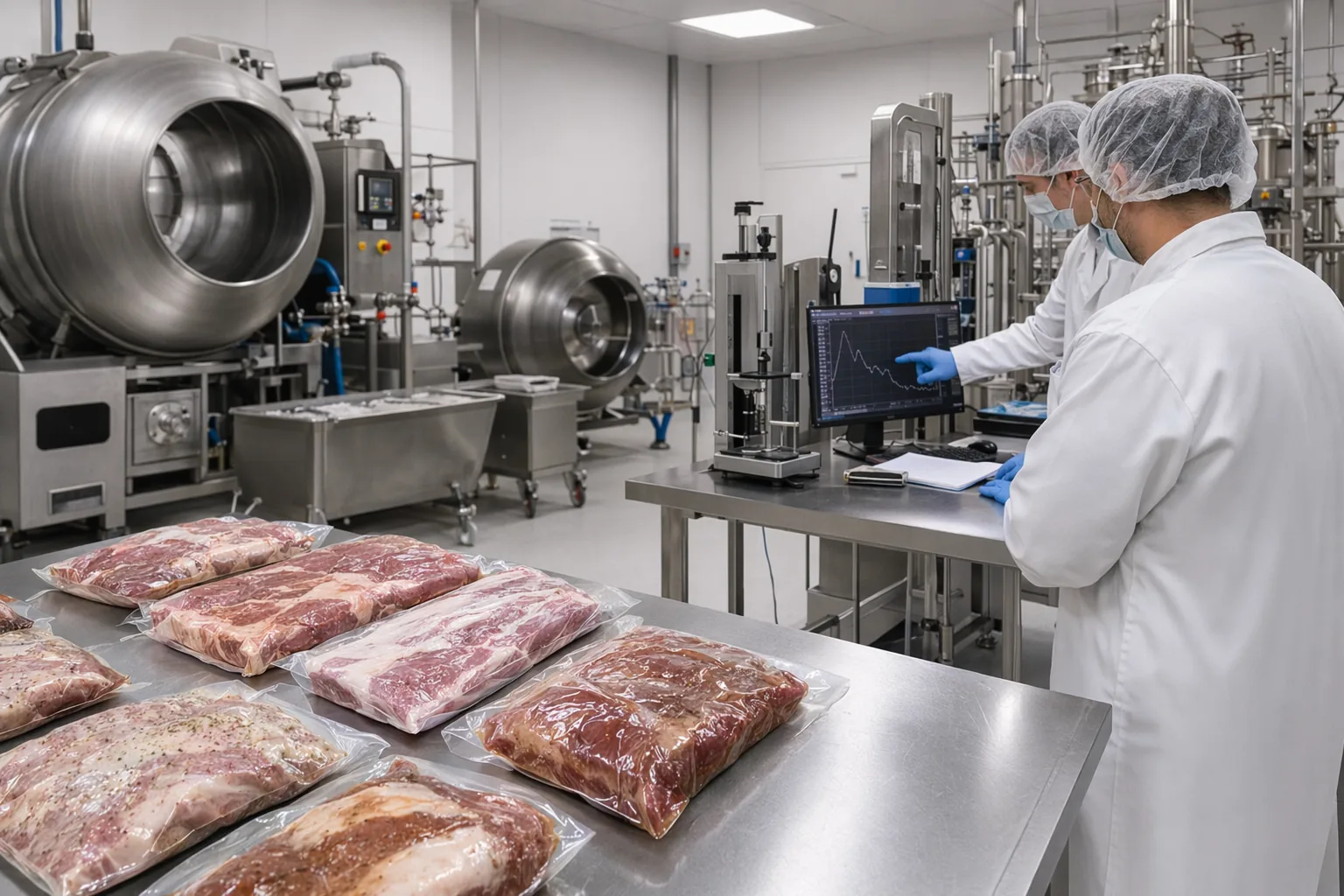
A practical B2B guide for meat processors selecting and validating protease systems for tenderization, restructured meat, and sausage applications.
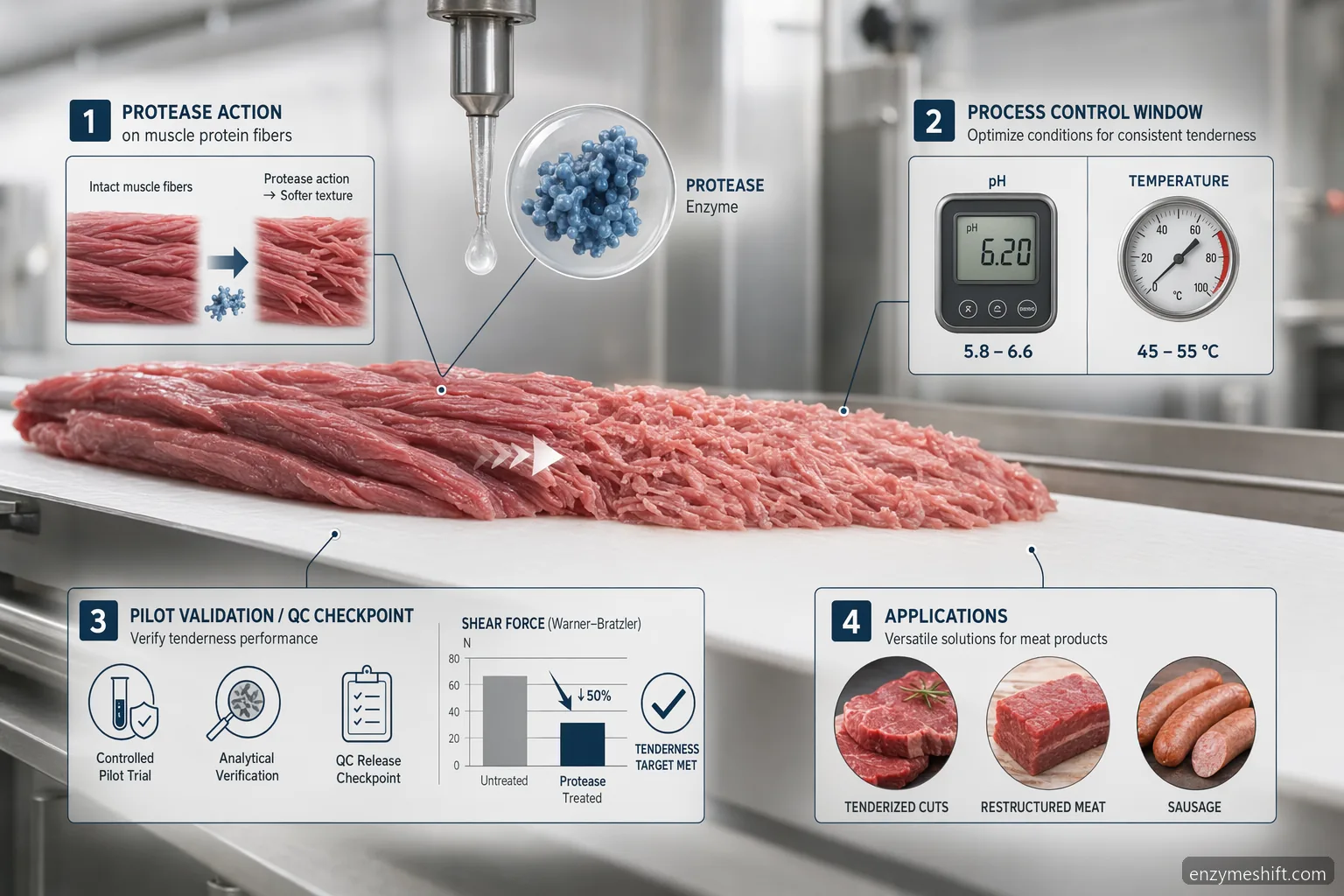
Where meat tenderizer enzymes fit in processing
An industrial meat tenderizer enzyme for meat tenderization is typically a protease preparation used to partially hydrolyze muscle proteins and reduce toughness in beef, pork, poultry, and further-processed meats. Common enzyme types include plant-derived proteases such as papain, bromelain, and ficin, as well as selected microbial proteases. In B2B production, the goal is controlled texture improvement, not uncontrolled softening. The enzyme may be applied through injection brine, vacuum tumbling, surface marination, or blended seasoning systems. For restructured meat, processors may also evaluate transglutaminase as a cold-set binder, which works differently by cross-linking proteins rather than tenderizing through proteolysis. A qualified meat tenderizer enzyme supplier for meat tenderization should help match enzyme activity, heat stability, and processing window to the target product.
Best fit: tougher whole-muscle cuts, value-added marinated meats, and processed meat systems. • Avoid overuse where slice integrity, bite, or cook yield could be compromised. • Define the target texture before selecting enzyme type or dosage.
Typical process conditions for tenderization
Process conditions should be based on the enzyme TDS and confirmed in the plant. Many protease systems for meat tenderization perform around meat pH 5.5 to 7.0, though optimum pH varies by enzyme source. Application is often done cold, such as 0 to 5°C during brine preparation, injection, or tumbling, to maintain food safety and slow excessive reaction. Proteolytic activity increases as temperature rises, so contact time before cooking is critical. Common development trials may start around 0.01% to 0.10% enzyme preparation on finished product weight, or use an activity-based dose from the supplier. Cooking frequently reduces or inactivates activity when the product reaches sufficiently high internal temperatures, often around 70°C or above, but validation is required for each enzyme and product geometry.
Control brine temperature and holding time. • Record enzyme lot, activity, dosage, and batch yield. • Confirm thermal inactivation in the finished product.
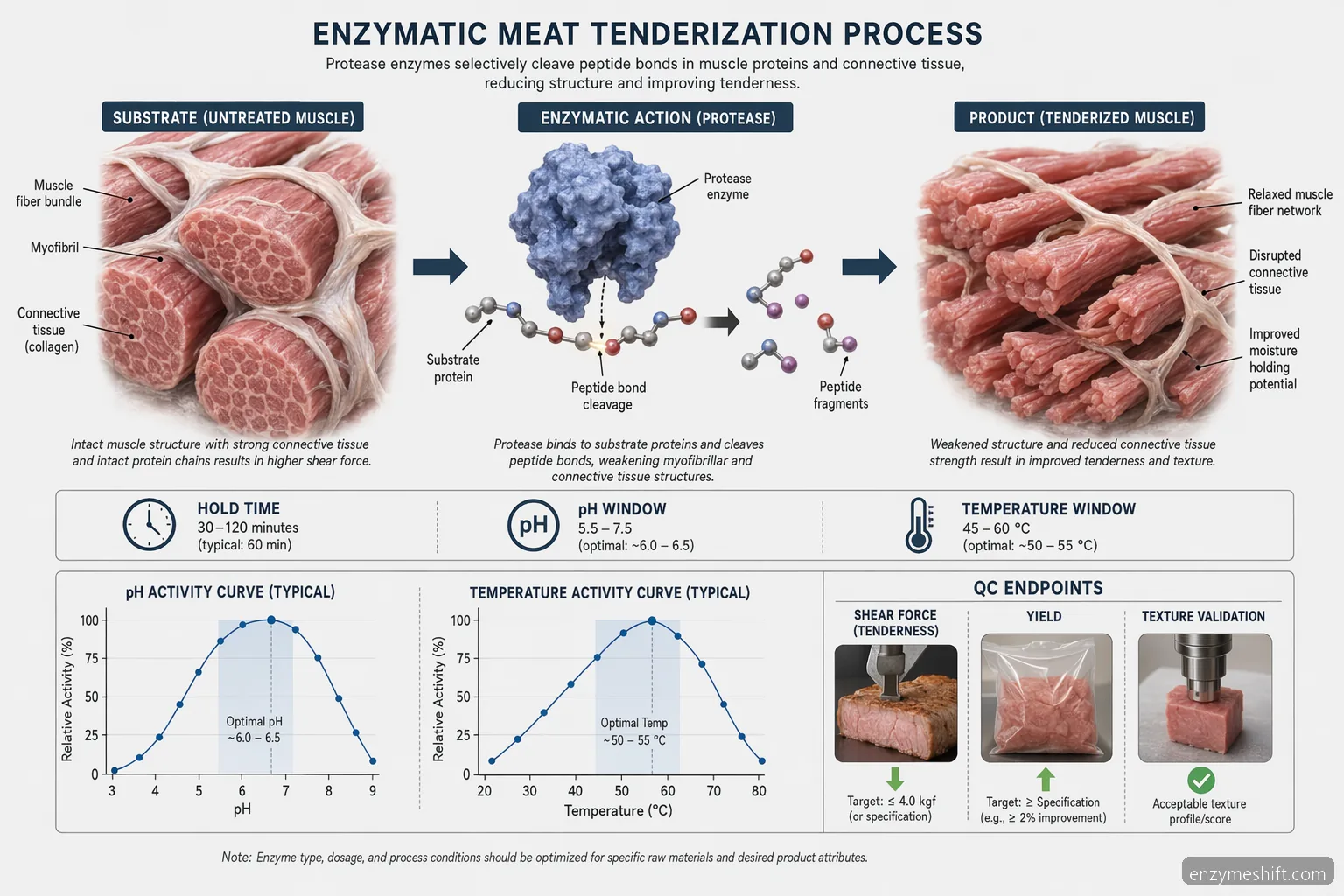
Pilot validation and QC checkpoints
Pilot validation should compare untreated control batches against two or three enzyme dose levels under the same brine, tumble, hold, and cook conditions. For industrial meat tenderizer enzyme meat tenderization, evaluate both sensory and instrumental data. Texture profile analysis, shear force, sliceability, purge loss, cook yield, pH, water activity where relevant, and microbiological controls should be included in the trial plan. Processors producing sausage or restructured meat should also check bite, binding, fat smear, emulsion stability, and casing performance. Hold samples through intended chilled or frozen shelf life because enzyme effects and purge can change over time. A meat tenderizer enzyme supplier for sausage should provide application guidance without replacing plant-level HACCP, quality, or regulatory review.
Use a control and multiple dose points. • Measure tenderness, yield, purge, and appearance. • Check texture after chilled or frozen storage. • Document pass/fail limits before scaling.
Restructured meat and cold-set binder considerations
For restructured meat, processors often compare protease-based tenderization with protein-binding systems. An industrial restructured meat enzyme meat tenderization program may use a tenderizer enzyme to improve eating quality, while a cold-set binder such as transglutaminase can improve particle adhesion and slice integrity. These functions should not be treated as interchangeable. Transglutaminase systems commonly operate near typical meat pH ranges and chilled processing temperatures, with binding time often validated between several hours and overnight depending on formulation, salt level, particle size, and equipment. When evaluating an industrial meat tenderizer enzyme restructured meat solution, confirm that tenderness gains do not weaken bind strength or increase purge. A restructured meat enzyme supplier for meat tenderization should support combined trials where tenderness, adhesion, yield, and labeling requirements are assessed together.
Tenderizing enzymes soften texture; binders improve cohesion. • Validate bind strength after chilling, cooking, slicing, and reheating. • Confirm any label declaration with local regulatory counsel.
Supplier qualification and cost-in-use
Industrial enzyme purchasing should focus on documented performance and supply reliability. Request a current COA for each lot, a technical data sheet with activity definition and application range, and an SDS for handling and storage. Ask for allergen, origin, carrier, recommended storage, shelf-life, and regulatory information relevant to the destination market. Cost-in-use should be calculated per metric ton of finished meat, not only per kilogram of enzyme. Include dosage, activity strength, yield change, labor impact, reduced rejects, sensory consistency, and any added hold time. A dependable meat tenderizer enzyme supplier for meat tenderization should support pilot-scale validation, provide sample quantities, explain variability between lots, and help establish receiving QC without making unsupported performance guarantees.
Review COA, TDS, SDS, and activity method. • Calculate cost per finished ton. • Qualify backup supply where continuity is critical. • Set storage and retest controls for enzyme inventory.
Technical Buying Checklist
Buyer Questions
Start with technical fit, not price alone. Ask the supplier for activity units, recommended dosage range, pH and temperature guidance, COA, TDS, SDS, and storage requirements. A qualified supplier should support pilot trials using your raw material, brine, equipment, and cook cycle. Compare cost-in-use per finished ton, texture consistency, yield impact, delivery reliability, and documentation quality before approval.
One enzyme may work across several meat systems, but the process window usually changes. Beef muscle structure, poultry pH, pork cure systems, salt, phosphate, fat level, and grind size can all alter enzyme performance. Sausage applications require extra checks for bind, bite, emulsion stability, and purge. Use separate pilot validation for each product rather than transferring a dosage directly.
A tenderizer enzyme is usually a protease that breaks down selected muscle proteins to reduce toughness. A restructured meat enzyme, often referring to a binder such as transglutaminase, helps proteins link together and improves cohesion. In some products, both may be evaluated, but they should be optimized separately because excessive proteolysis can reduce sliceability or weaken restructured meat binding.
Control over-tenderization by limiting dosage, contact time, temperature exposure, and variability in brine uptake. Keep application steps chilled, record batch times, and validate the cook cycle for enzyme reduction or inactivation. Use objective QC such as shear force, texture profile analysis, purge, and slice integrity. During scale-up, compare multiple production lots because raw material condition can change enzyme response.
Request the COA, TDS, SDS, allergen statement, ingredient composition or carrier information, origin, shelf life, recommended storage, and regulatory status for your market. For sausage, also ask for application guidance on grind size, mixing sequence, salt level, temperature, and cook conditions. Final approval should include pilot batches, sensory review, yield data, microbiological controls, and label review by your compliance team.
Related Search Themes
meat tenderizer enzyme supplier for meat tenderization, meat tenderizer enzyme for meat tenderization, industrial restructured meat enzyme meat tenderization, industrial meat tenderizer enzyme sausage, industrial meat tenderizer enzyme restructured meat, restructured meat enzyme supplier for meat tenderization
Meat Processing Enzymes for Research & Industry
Need Meat Processing Enzymes for your lab or production process?
ISO 9001 certified · Food-grade & research-grade · Ships to 80+ countries
Frequently Asked Questions
How do I choose a meat tenderizer enzyme supplier for meat tenderization?
Start with technical fit, not price alone. Ask the supplier for activity units, recommended dosage range, pH and temperature guidance, COA, TDS, SDS, and storage requirements. A qualified supplier should support pilot trials using your raw material, brine, equipment, and cook cycle. Compare cost-in-use per finished ton, texture consistency, yield impact, delivery reliability, and documentation quality before approval.
Can one meat tenderizer enzyme for meat tenderization work in beef, pork, poultry, and sausage?
One enzyme may work across several meat systems, but the process window usually changes. Beef muscle structure, poultry pH, pork cure systems, salt, phosphate, fat level, and grind size can all alter enzyme performance. Sausage applications require extra checks for bind, bite, emulsion stability, and purge. Use separate pilot validation for each product rather than transferring a dosage directly.
What is the difference between an industrial restructured meat enzyme and a tenderizer?
A tenderizer enzyme is usually a protease that breaks down selected muscle proteins to reduce toughness. A restructured meat enzyme, often referring to a binder such as transglutaminase, helps proteins link together and improves cohesion. In some products, both may be evaluated, but they should be optimized separately because excessive proteolysis can reduce sliceability or weaken restructured meat binding.
How should processors prevent over-tenderization?
Control over-tenderization by limiting dosage, contact time, temperature exposure, and variability in brine uptake. Keep application steps chilled, record batch times, and validate the cook cycle for enzyme reduction or inactivation. Use objective QC such as shear force, texture profile analysis, purge, and slice integrity. During scale-up, compare multiple production lots because raw material condition can change enzyme response.
What documents are needed before buying an industrial meat tenderizer enzyme for sausage?
Request the COA, TDS, SDS, allergen statement, ingredient composition or carrier information, origin, shelf life, recommended storage, and regulatory status for your market. For sausage, also ask for application guidance on grind size, mixing sequence, salt level, temperature, and cook conditions. Final approval should include pilot batches, sensory review, yield data, microbiological controls, and label review by your compliance team.
Related: Meat Processing Enzymes for Controlled Processing
Turn This Guide Into a Supplier Brief Contact EnzymeShift to discuss pilot samples, documentation, and cost-in-use modeling for your meat tenderization process. See our application page for Meat Processing Enzymes for Controlled Processing at /applications/meat-processing-enzymes/ for specs, MOQ, and a free 50 g sample.
Contact Us to Contributehello@mail.enzymeshift.com