Industrial Meat Processing Enzymes Meat Tenderization Formulation Guide
Formulation guide for industrial meat processing enzymes in meat tenderization, with dosage, pH, temperature, QC, and supplier checks.
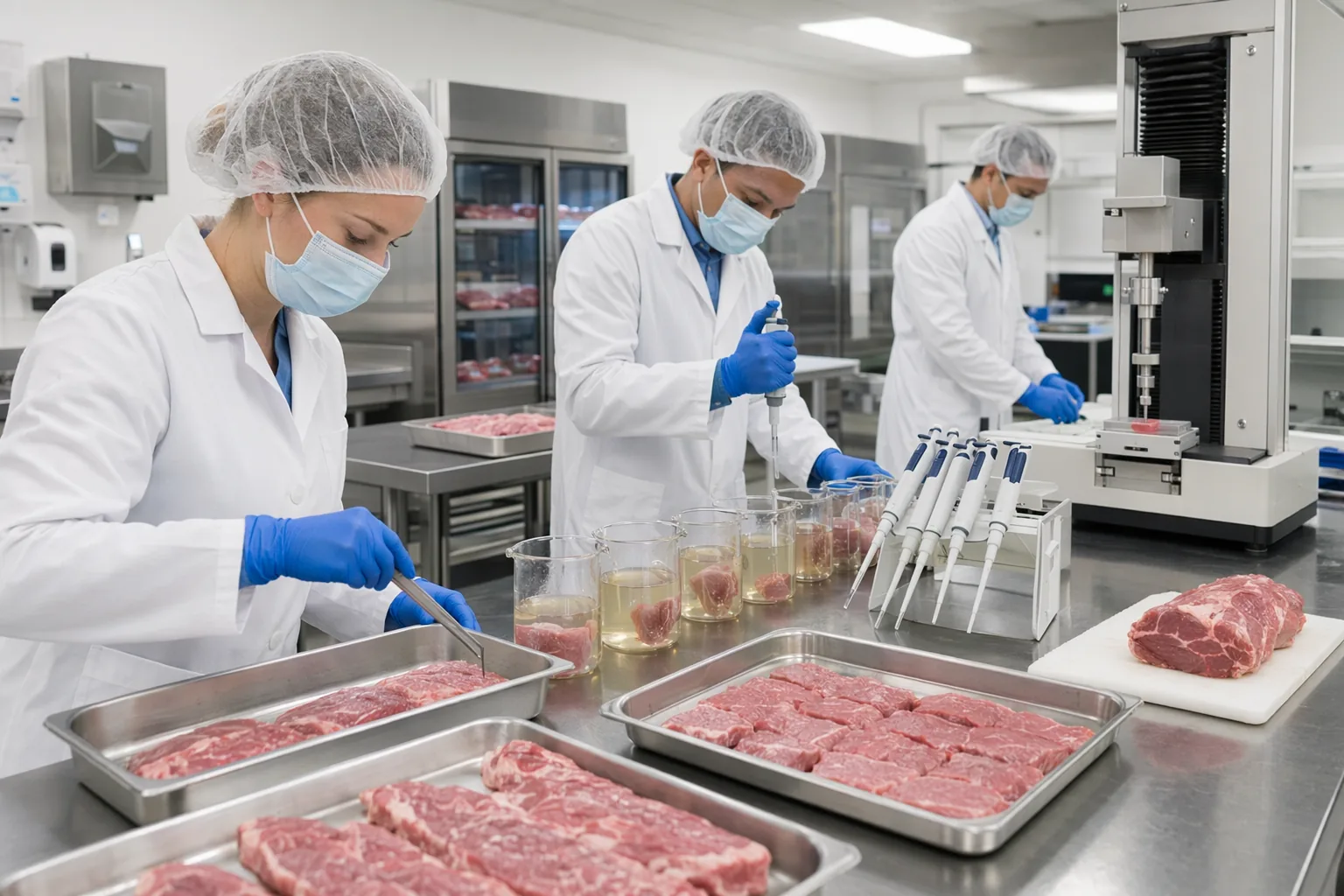
A practical B2B guide for selecting, dosing, and validating meat processing enzymes for consistent meat tenderization in injected, tumbled, marinated, and cooked products.
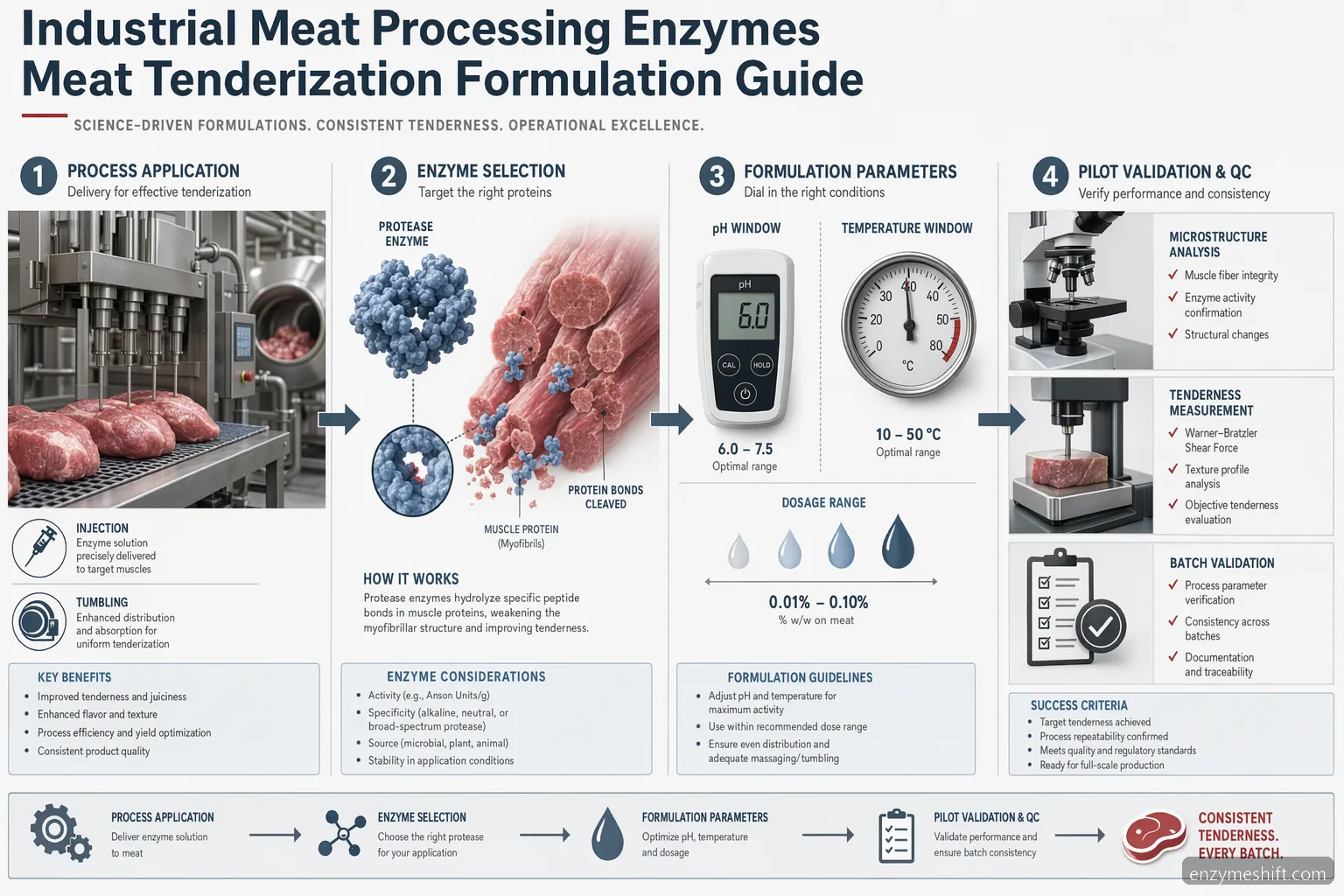
Why enzymes are used in industrial meat tenderization
Industrial meat processing enzymes meat tenderization programs are designed to improve eating quality, reduce variability between raw material lots, and support value-added formats such as marinated cuts, cooked meats, sausage, and portion-controlled products. Proteolytic enzymes such as papain, bromelain, ficin, and microbial proteases can partially hydrolyze myofibrillar and connective tissue proteins, changing bite, chew, and perceived tenderness. In formulation work, the goal is controlled protein modification, not uncontrolled breakdown. The best results come from matching the enzyme system to raw material age, muscle type, fat level, brine composition, residence time, and thermal process. For B2B buyers, meat processing enzymes should be evaluated as functional processing aids with measurable performance criteria, batch documentation, and pilot validation before scale-up.
Primary target: controlled tenderization and texture standardization • Common formats: injected cuts, tumbled meats, marinades, cooked meats, sausage • Risk to manage: soft, pasty, or uneven texture from excessive proteolysis
Selecting the right meat tenderizer enzyme
A meat tenderizer enzyme should be selected according to the protein target and the plant process window. Plant-derived proteases often show broad protein activity and can be effective when heat activation occurs during cooking, while microbial proteases may offer different pH and temperature profiles. Review the TDS for activity units, optimum pH, recommended temperature range, carrier system, solubility, and inactivation guidance. In meat tenderization, many formulations operate near meat pH, commonly about pH 5.5 to 6.5, while brines may be adjusted depending on phosphate, salt, sugar, acidulants, and flavor systems. Enzyme compatibility should be checked with curing salts, antioxidants, smoke flavors, starches, hydrocolloids, and antimicrobials. When comparing meat processing enzymes for meat tenderization, request equivalent activity-based trials rather than comparing dose by weight alone.
Check enzyme activity units and assay method • Confirm performance near finished-product pH • Screen compatibility with salt, phosphate, cure, and flavors • Compare suppliers using cost-in-use, not price per kilogram
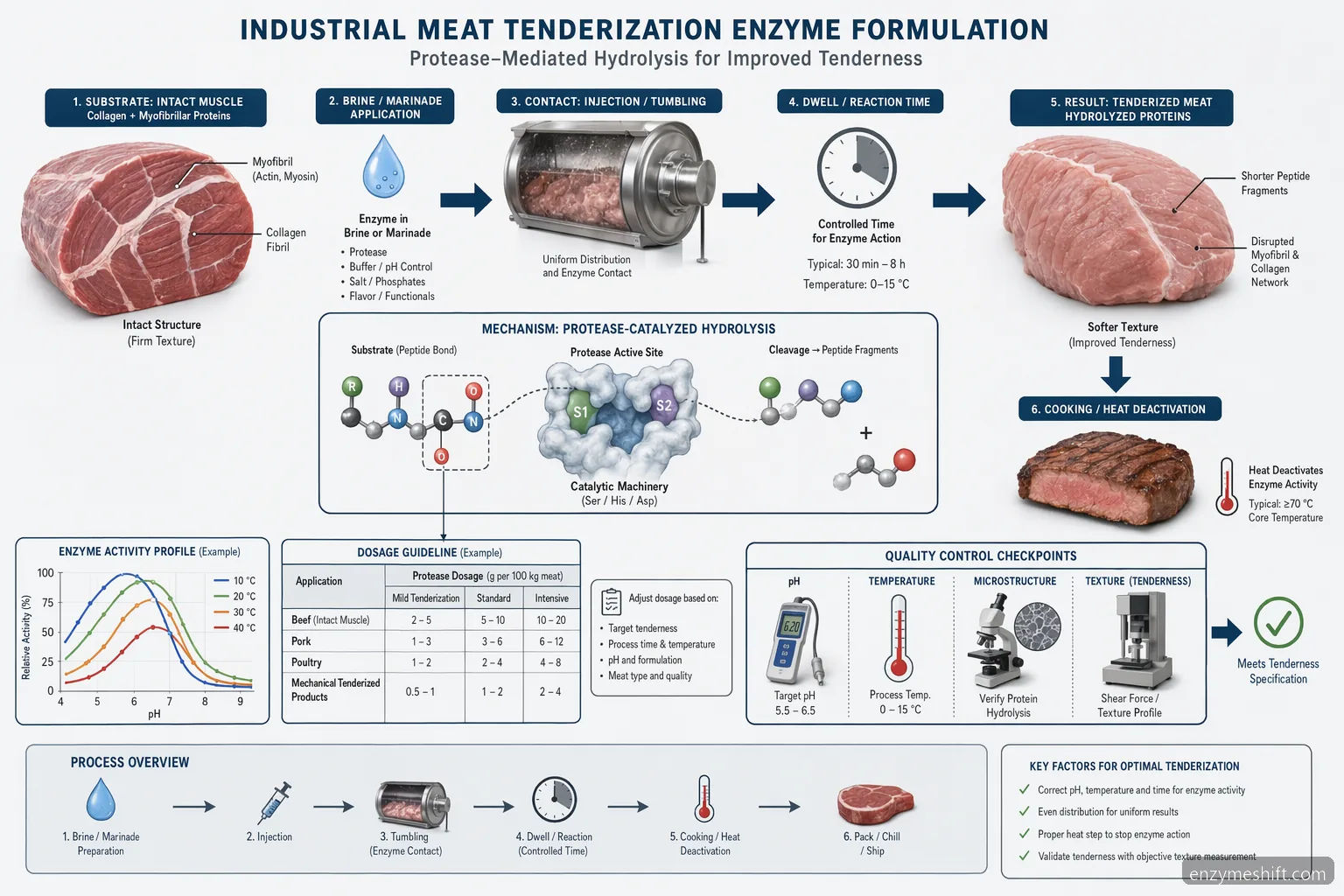
Practical dosage, pH, and temperature starting points
Initial dosage depends on enzyme activity, substrate, contact time, and desired texture. As a conservative starting range, many industrial trials begin around 0.01% to 0.15% enzyme preparation on meat weight, or at a supplier-recommended activity dosage expressed in units per kilogram. For strong proteases or long holding times, lower starting points are recommended. Typical application temperatures include chilled mixing, injection, or tumbling at 0 to 8°C to manage microbiological risk, followed by controlled activation during tempering or cooking when applicable. Many proteases show faster activity at warmer temperatures, often in the 40 to 60°C range, but exact conditions must follow the supplier TDS. Define maximum residence time, product core temperature, and heat inactivation target before scale-up to prevent continued tenderization after packaging.
Start low and increase based on texture data • Hold chilled during brine preparation and tumbling • Validate enzyme inactivation during the actual cook schedule • Do not transfer dosage from another supplier without activity adjustment
How to formulate enzymes into brines, marinades, and sausage
For injected or tumbled meats, disperse meat processing enzymes uniformly into the brine or marinade after confirming solubility and order of addition. Hydrate functional salts, phosphates, starches, gums, or proteins as required, then add the enzyme under gentle agitation to limit foaming and avoid localized over-dosing. For surface marinades, coverage and dwell time are critical because enzyme migration may be uneven. In sausage, industrial meat processing enzymes sausage applications require tighter control because comminution increases surface area and proteolysis can rapidly affect bind, sliceability, and bite. If the same facility also uses industrial meat processing enzymes restructured meat systems, separate tenderizing proteases from cold-set binder systems such as transglutaminase workflows to prevent conflicting texture effects. Always validate carryover, cleaning, and labeling requirements with regulatory and quality teams.
Use calibrated scales for small enzyme additions • Avoid enzyme hot spots by ensuring complete dispersion • Confirm compatibility with binders and restructured meat processes • Document the exact order of addition
Pilot validation and QC checkpoints
Pilot work should convert enzyme performance into measurable processing data. Build trials around a control, two or three dosage levels, and the intended process conditions. Track raw material temperature, pH, brine strength, injection percentage, tumble time, vacuum level, rest time, cook schedule, and finished yield. Tenderness can be assessed using Warner-Bratzler shear force, texture profile analysis, trained sensory panels, or an internal bite score, provided the method is consistent. Additional QC checks should include purge loss, cook yield, sliceability, appearance, color stability, water activity where relevant, and microbiological compliance. A successful pilot identifies the lowest effective dosage, acceptable process tolerance, and any failure mode such as mushy texture, excessive purge, or weak bind. This is where cost-in-use should be calculated against yield, trim utilization, and customer specification targets.
Run a no-enzyme control for every pilot • Measure texture after the same chill and hold time • Record lot numbers and activity units • Confirm sensory acceptance before production release
Supplier qualification for meat processing enzymes
A qualified meat processing enzymes supplier for meat tenderization should provide clear technical and quality documentation before commercial approval. Request a current COA for the supplied lot, a TDS with activity definition and use guidance, and an SDS for handling and storage. Buyers should also review allergen statements, ingredient declaration support, country of origin, shelf life, storage conditions, traceability, and change-notification practices. For enzyme powders, assess dust control and worker handling procedures; for liquids, review preservation, viscosity, and cold-chain needs if applicable. Ask whether the supplier can support pilot design, troubleshooting, and scale-up calculations. Avoid procurement based only on quoted price. The preferred supplier should demonstrate reproducible activity, practical formulation support, and transparent documentation for food manufacturing audits.
Request COA, TDS, SDS, allergen, and traceability documents • Verify activity consistency between lots • Review storage and handling requirements • Assess technical support and supply reliability
Technical Buying Checklist
Buyer Questions
Enzymes in meat processing are used to create controlled functional changes in meat proteins. In meat tenderization, proteases partially hydrolyze proteins to improve bite and reduce toughness. Other enzyme systems may support restructured meat or cold-set binder applications, but they should not be treated as interchangeable. Each enzyme requires validation for pH, temperature, dosage, process time, and finished texture.
Choose a supplier that provides reproducible activity, clear technical documentation, and practical application support. At minimum, request a COA, TDS, SDS, allergen statement, traceability information, shelf-life data, and storage guidance. A strong supplier should help design pilot trials, convert activity units into plant-scale dosage, and support cost-in-use analysis without making unsupported performance claims.
Yes, industrial meat processing enzymes sausage applications are possible, but control is important because grinding increases protein exposure and can accelerate texture changes. Use lower trial dosages, short contact times, and defined cook or inactivation steps. Evaluate bind, bite, sliceability, purge, fat separation, and sensory quality. Proteases used for tenderization should be separated from binder systems unless compatibility is proven.
Useful QC tests include pH, brine uptake, product temperature, cook yield, purge loss, sliceability, and a repeatable tenderness method such as shear force, texture profile analysis, or trained sensory scoring. Microbiological checks must remain part of the validation plan. Compare every enzyme trial with a no-enzyme control and evaluate texture after the same chilling and holding period.
For industrial buyers, the most useful technical support is usually a TDS, pilot protocol, and application note rather than a generic role of enzymes in meat processing PPT or PDF. When requested, supplier teams can often provide training materials that explain enzyme selection, dosage, pH, temperature, QC checks, and safe handling for plant formulation teams.
Related Search Themes
meat processing enzymes supplier for meat tenderization, meat processing enzymes for meat tenderization, industrial meat processing enzymes sausage, industrial meat processing enzymes restructured meat, enzymes in meat processing, meat processing enzymes
Meat Processing Enzymes for Research & Industry
Need Meat Processing Enzymes for your lab or production process?
ISO 9001 certified · Food-grade & research-grade · Ships to 80+ countries
Frequently Asked Questions
What are enzymes in meat processing used for?
Enzymes in meat processing are used to create controlled functional changes in meat proteins. In meat tenderization, proteases partially hydrolyze proteins to improve bite and reduce toughness. Other enzyme systems may support restructured meat or cold-set binder applications, but they should not be treated as interchangeable. Each enzyme requires validation for pH, temperature, dosage, process time, and finished texture.
How do I choose a meat processing enzymes supplier for meat tenderization?
Choose a supplier that provides reproducible activity, clear technical documentation, and practical application support. At minimum, request a COA, TDS, SDS, allergen statement, traceability information, shelf-life data, and storage guidance. A strong supplier should help design pilot trials, convert activity units into plant-scale dosage, and support cost-in-use analysis without making unsupported performance claims.
Can industrial meat processing enzymes be used in sausage?
Yes, industrial meat processing enzymes sausage applications are possible, but control is important because grinding increases protein exposure and can accelerate texture changes. Use lower trial dosages, short contact times, and defined cook or inactivation steps. Evaluate bind, bite, sliceability, purge, fat separation, and sensory quality. Proteases used for tenderization should be separated from binder systems unless compatibility is proven.
What QC tests confirm successful meat tenderization?
Useful QC tests include pH, brine uptake, product temperature, cook yield, purge loss, sliceability, and a repeatable tenderness method such as shear force, texture profile analysis, or trained sensory scoring. Microbiological checks must remain part of the validation plan. Compare every enzyme trial with a no-enzyme control and evaluate texture after the same chilling and holding period.
Do you provide role of enzymes in meat processing PPT or PDF support?
For industrial buyers, the most useful technical support is usually a TDS, pilot protocol, and application note rather than a generic role of enzymes in meat processing PPT or PDF. When requested, supplier teams can often provide training materials that explain enzyme selection, dosage, pH, temperature, QC checks, and safe handling for plant formulation teams.
Related: Meat Processing Enzymes for Controlled Processing
Turn This Guide Into a Supplier Brief Contact EnzymeShift to discuss pilot-ready meat processing enzymes for your tenderization formulation. See our application page for Meat Processing Enzymes for Controlled Processing at /applications/meat-processing-enzymes/ for specs, MOQ, and a free 50 g sample.
Contact Us to Contributehello@mail.enzymeshift.com