Industrial Restructured Meat Enzyme Meat Tenderization Guide
Troubleshoot industrial restructured meat enzyme use in meat tenderization: dosage, pH, temperature, QC, supplier documents, and pilot trials.
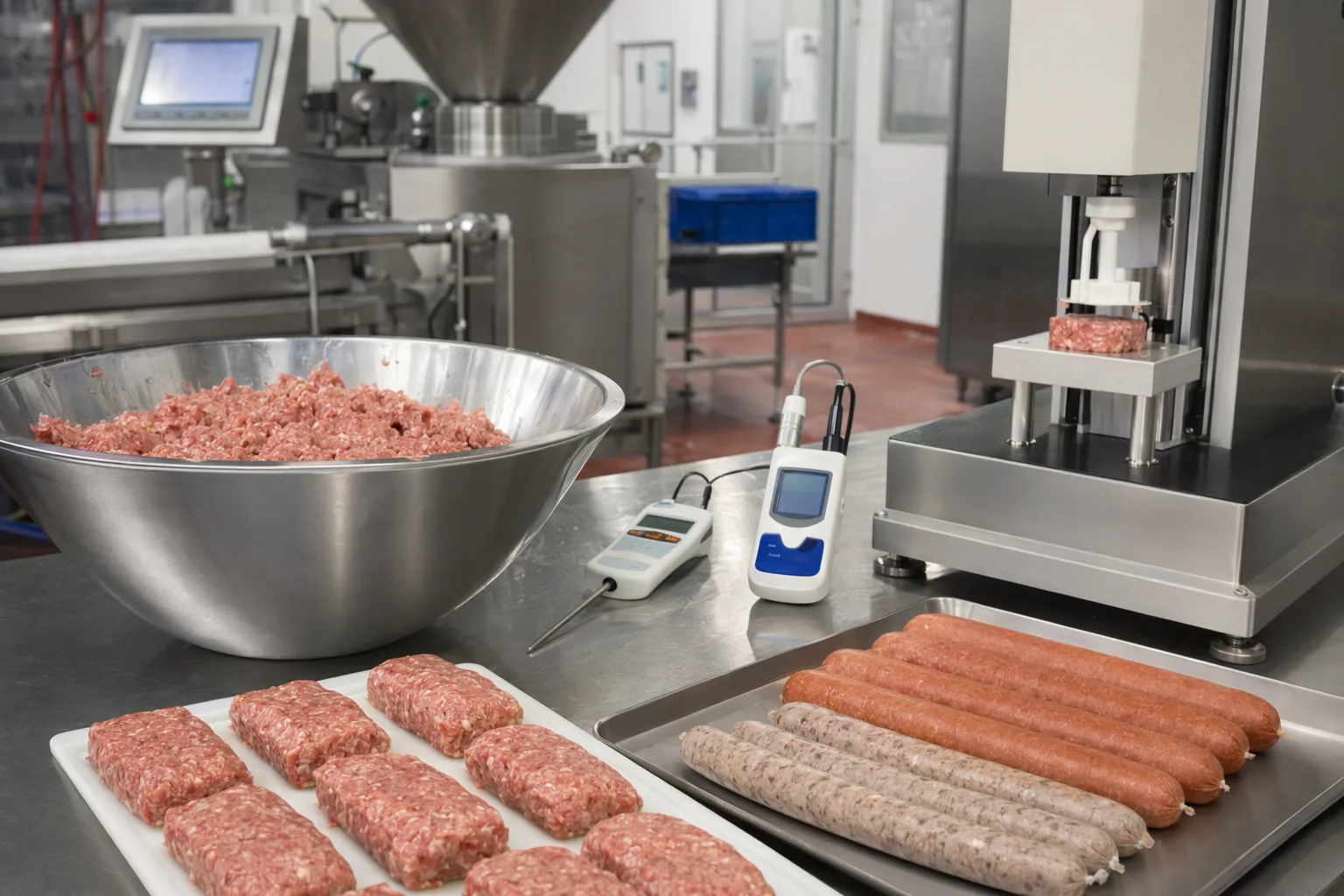
A practical troubleshooting guide for processors evaluating meat processing enzymes for tenderized cuts, restructured meat, and sausage systems.
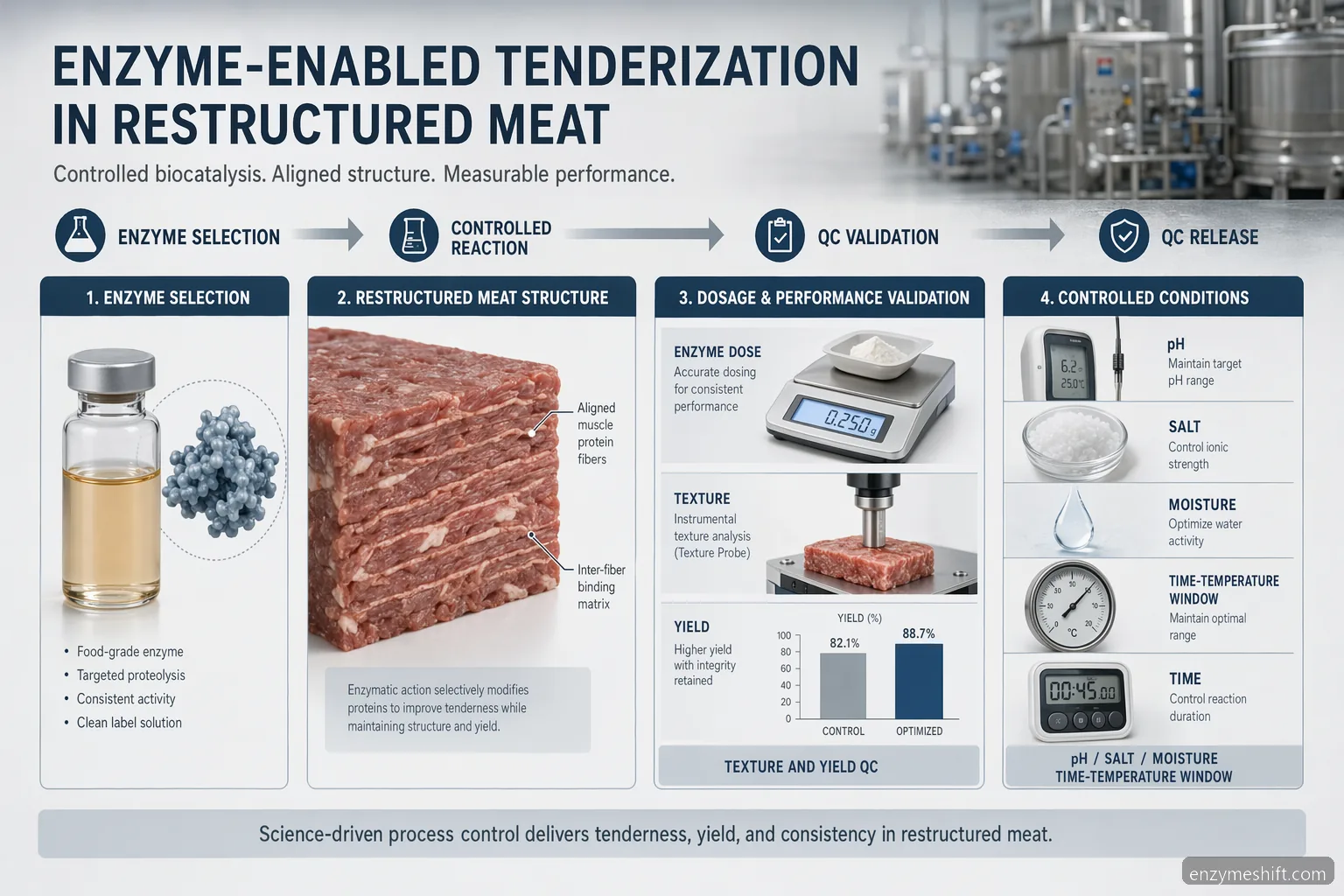
Why Tenderization Problems Happen in Restructured Meat
Industrial restructured meat enzyme meat tenderization projects often fail when the enzyme is chosen for the wrong function. A protease-based meat tenderizer enzyme can reduce toughness in whole-muscle or injected products, but excessive activity may cause mushy texture, purge, and weak sliceability. A cold-set binder, commonly selected for restructured meat, is used to help bind meat pieces into a cohesive form, but it does not replace controlled proteolysis when the primary defect is tough connective tissue. In sausage, enzyme choice must also consider fat level, salt extraction, chopping temperature, and final bite. Troubleshooting should start by defining the defect: tough bite, poor bind, crumbling slices, excessive softness, low yield, or inconsistent batch-to-batch performance. From there, processors can select a restructured meat enzyme for meat tenderization, binding, or both, then confirm performance under actual pH, temperature, and dwell-time conditions.
Define whether the problem is tenderness, binding, yield, or slice integrity. • Avoid using higher enzyme dose to compensate for poor mixing or temperature control. • Separate protease tenderization trials from cold-set binder trials during screening.
Dosage: Start Low, Validate by Texture and Yield
For an industrial meat tenderizer enzyme restructured meat trial, dosage should be set from supplier activity data rather than weight alone. Different enzyme concentrates can vary widely in declared activity, carrier content, and recommended use level. As a practical pilot range, many processors begin enzyme screening around 0.01% to 0.10% of meat block weight for concentrated enzyme preparations, then adjust based on texture, hold time, and thermal inactivation. For binder-type systems used in restructured meat, trial dosage may differ and should follow the product TDS. The key is to evaluate cost-in-use per kilogram of finished product, not just enzyme price. Overdosing can lower cook yield, weaken bite, or create pasty texture, while underdosing may show no measurable improvement. Build a small design of experiments with control, low, target, and high dose levels before approving production use.
Record enzyme lot, activity, dose, meat temperature, pH, and contact time. • Compare control and treated samples after cooking and chilled holding. • Track cost-in-use alongside yield gain and quality improvement.
pH, Salt, and Moisture Conditions That Change Performance
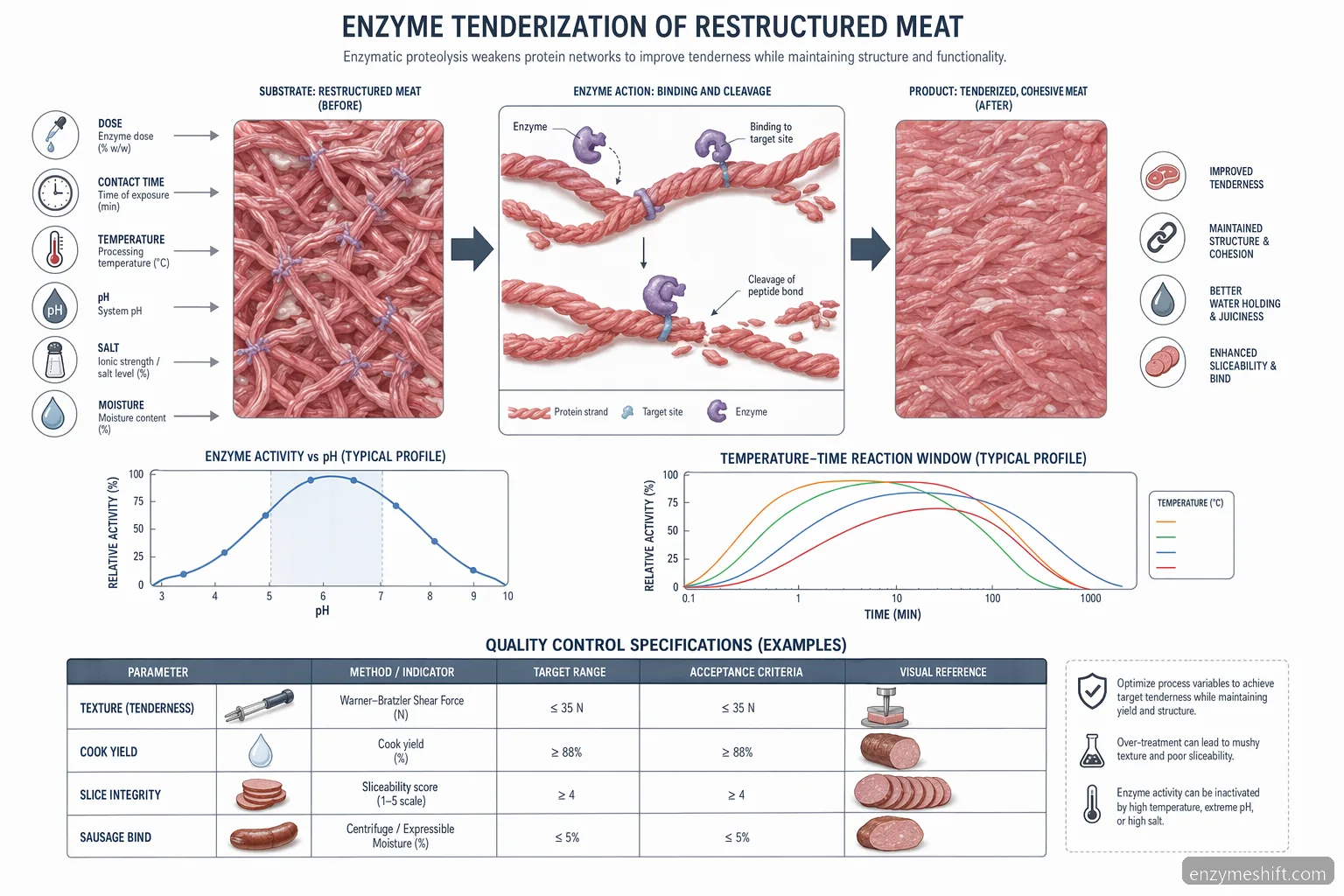
A restructured meat enzyme supplier for meat tenderization should provide a TDS with the enzyme’s effective pH range, optimal pH range, and known inhibitors or processing sensitivities. Meat systems commonly operate around pH 5.4 to 6.4, but marination, phosphates, fermentation, or ingredient variability can shift the actual working pH. Protease activity may increase, decrease, or change selectivity depending on pH, which affects tenderness and the risk of soft texture. Cold-set binder performance can also be influenced by salt extraction, water distribution, protein availability, and surface contact between meat particles. For sausage, ionic strength, chopping sequence, and moisture addition can affect whether the enzyme reaches the intended substrate evenly. Troubleshooting should include direct pH measurement of the finished mix, not only raw meat pH. If pH varies by supplier, season, or formulation, set acceptance limits before scaling.
Measure pH after brine addition or final mixing. • Confirm compatibility with salt, phosphate, acids, sugars, and cure ingredients. • Evaluate water-binding and purge when changing marinade composition.
Temperature and Time: Control the Reaction Window
Industrial meat tenderizer enzyme meat tenderization depends heavily on temperature and dwell time. Many enzyme systems show limited activity under very cold conditions and faster activity as temperature rises, but uncontrolled warming can create excessive proteolysis before cooking. In meat plants, practical trials often monitor raw material at 0 to 4°C for chilled handling, mixing below 10°C where product safety and texture require it, and defined activation or holding steps only when validated. Some processes rely on enzyme action during marination or tumbling, while others depend on action during heating until the enzyme is inactivated. The right condition is product-specific and must be aligned with food safety plans. A troubleshooting trial should map time and temperature from enzyme addition through forming, holding, cooking, chilling, and slicing. Even a small delay before cooking can change tenderness or bind strength.
Use data loggers during pilot and first production runs. • Define maximum hold time after enzyme addition. • Verify cooking conditions reduce enzyme activity as intended.
QC Checks for Restructured Meat, Tenderized Cuts, and Sausage
A restructured meat enzyme for meat tenderization should be approved only after objective quality checks show repeatable improvement. For tenderized cuts, measure shear force or an internal texture method, cook loss, purge, sensory bite, and appearance. For industrial restructured meat enzyme restructured meat projects, add slice integrity, bind strength, vacuum-pack stability, form retention, and yield after cooking and chilling. For industrial restructured meat enzyme sausage applications, evaluate emulsion stability, fat-out, bite, juiciness, casing performance, and chilled storage changes. Include microbial controls because enzyme trials can alter hold times or temperatures. QC should compare untreated control, incumbent process, and candidate enzyme process under the same raw material conditions. When possible, test multiple meat lots to avoid approving a process that only works on one supplier’s raw material. Document acceptance ranges before negotiating supply.
Texture: shear, compression, bend, or trained sensory panel. • Yield: raw pickup, cook loss, purge, and finished pack weight. • Structure: sliceability, binding, crumbling, and visual defects. • Safety: time-temperature records and microbiological verification.
Supplier Qualification and Scale-Up Questions
Choosing a restructured meat enzyme supplier for restructured meat or sausage is not only a pricing exercise. Buyers should request a current COA for each lot, TDS with activity definition and use guidance, SDS, ingredient statement, allergen information, storage conditions, shelf-life, country-of-origin or traceability details where needed, and regulatory suitability for the target market. Ask how activity is standardized, how lot variation is controlled, and whether the supplier can support pilot validation and troubleshooting. During scale-up, confirm that dispersion, mixing energy, brine injection, tumbling load, and forming pressure match the pilot method. A good supplier should help calculate cost-in-use, compare alternatives, and recommend safe trial boundaries without promising universal performance. Final approval should be based on plant data, finished-product quality, process fit, documentation, and supply reliability.
Request COA, TDS, SDS, allergen, storage, shelf-life, and traceability documents. • Confirm activity units and recommended trial dosage. • Assess technical support, lead time, packaging size, and lot consistency. • Approve only after pilot and plant validation.
Technical Buying Checklist
Buyer Questions
Use the defect as the starting point. If the meat is tough but holds together well, evaluate a protease-based meat tenderizer enzyme under controlled time and temperature. If pieces separate, crumble, or slice poorly, evaluate a cold-set binder for restructured meat. Some products need both functions, but they should be screened separately first to avoid confusing tenderization effects with binding performance.
Mushy texture usually points to excessive proteolysis, uneven enzyme distribution, too much dosage, excessive contact time, warm holding, or a pH condition that increases activity. Review the full timeline from enzyme addition through cooking. Run a lower-dose trial, tighten chilled handling, measure actual product pH, and verify that the cook step inactivates or limits the enzyme as expected for the formulation.
Possibly, but approval should be application-specific. Industrial restructured meat enzyme sausage trials must account for chopping temperature, fat level, salt extraction, casing, emulsion stability, and bite. Formed steak or restructured meat trials focus more on particle binding, slice integrity, purge, and cook yield. The same supplier product may perform differently because mixing, surface area, pH, and heat treatment are not identical.
Before purchase, request a COA for lot quality, TDS for activity and use conditions, SDS for safe handling, ingredient and allergen information, storage and shelf-life guidance, and traceability details. For B2B qualification, also ask about activity standardization, regulatory suitability for your market, packaging options, lead time, technical support, and whether the supplier can assist with pilot validation.
Calculate enzyme cost per kilogram of finished sellable product, not only price per kilogram of enzyme. Include dosage, dilution or brine losses, yield changes, downgrade reduction, slicing improvement, labor impact, scrap reduction, and any added holding or control steps. A higher-priced enzyme can be more economical if it delivers consistent quality at lower dose or improves finished-product yield.
Related Search Themes
restructured meat enzyme supplier for meat tenderization, restructured meat enzyme for meat tenderization, industrial restructured meat enzyme sausage, industrial restructured meat enzyme restructured meat, industrial meat tenderizer enzyme restructured meat, industrial meat tenderizer enzyme meat tenderization
Meat Processing Enzymes for Research & Industry
Need Meat Processing Enzymes for your lab or production process?
ISO 9001 certified · Food-grade & research-grade · Ships to 80+ countries
Frequently Asked Questions
How do I choose between a meat tenderizer enzyme and a cold-set binder?
Use the defect as the starting point. If the meat is tough but holds together well, evaluate a protease-based meat tenderizer enzyme under controlled time and temperature. If pieces separate, crumble, or slice poorly, evaluate a cold-set binder for restructured meat. Some products need both functions, but they should be screened separately first to avoid confusing tenderization effects with binding performance.
What causes mushy texture after enzyme tenderization?
Mushy texture usually points to excessive proteolysis, uneven enzyme distribution, too much dosage, excessive contact time, warm holding, or a pH condition that increases activity. Review the full timeline from enzyme addition through cooking. Run a lower-dose trial, tighten chilled handling, measure actual product pH, and verify that the cook step inactivates or limits the enzyme as expected for the formulation.
Can one industrial restructured meat enzyme work for sausage and formed steaks?
Possibly, but approval should be application-specific. Industrial restructured meat enzyme sausage trials must account for chopping temperature, fat level, salt extraction, casing, emulsion stability, and bite. Formed steak or restructured meat trials focus more on particle binding, slice integrity, purge, and cook yield. The same supplier product may perform differently because mixing, surface area, pH, and heat treatment are not identical.
What documents should an enzyme supplier provide before purchasing?
Before purchase, request a COA for lot quality, TDS for activity and use conditions, SDS for safe handling, ingredient and allergen information, storage and shelf-life guidance, and traceability details. For B2B qualification, also ask about activity standardization, regulatory suitability for your market, packaging options, lead time, technical support, and whether the supplier can assist with pilot validation.
How should cost-in-use be calculated for meat processing enzymes?
Calculate enzyme cost per kilogram of finished sellable product, not only price per kilogram of enzyme. Include dosage, dilution or brine losses, yield changes, downgrade reduction, slicing improvement, labor impact, scrap reduction, and any added holding or control steps. A higher-priced enzyme can be more economical if it delivers consistent quality at lower dose or improves finished-product yield.
Related: Meat Processing Enzymes for Controlled Processing
Turn This Guide Into a Supplier Brief Contact EnzymeShift to discuss pilot trials, documentation, and supplier options for meat processing enzymes. See our application page for Meat Processing Enzymes for Controlled Processing at /applications/meat-processing-enzymes/ for specs, MOQ, and a free 50 g sample.
Contact Us to Contributehello@mail.enzymeshift.com