Meat Processing Enzymes for Controlled Meat Tenderization — Supplier Guide
Source meat processing enzymes for controlled tenderization. Compare specs, dosage, QC, COA/TDS/SDS, pilot validation, and cost-in-use.
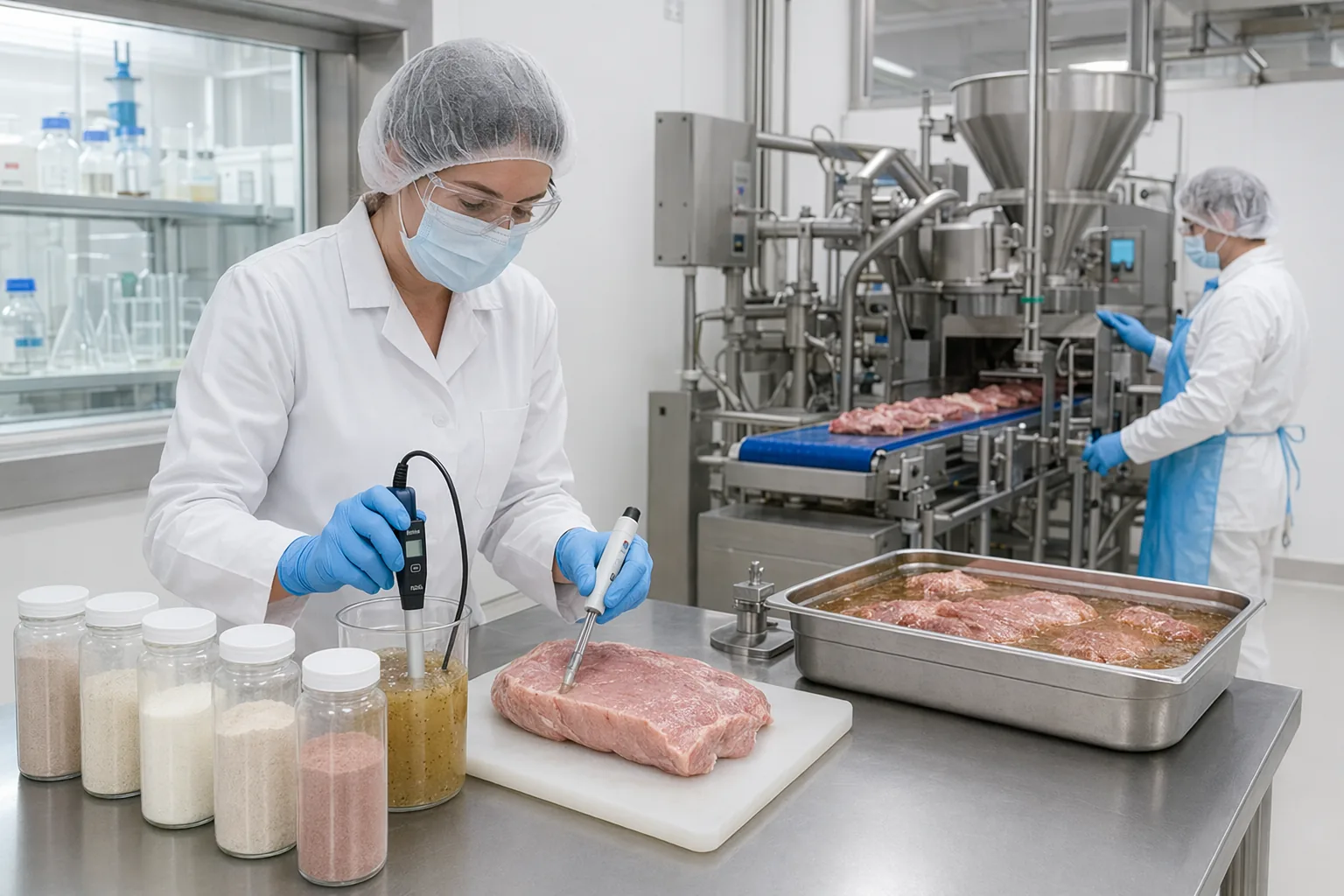
A practical B2B guide for processors selecting enzyme systems that improve tenderness, yield control, and eating quality without losing process consistency.
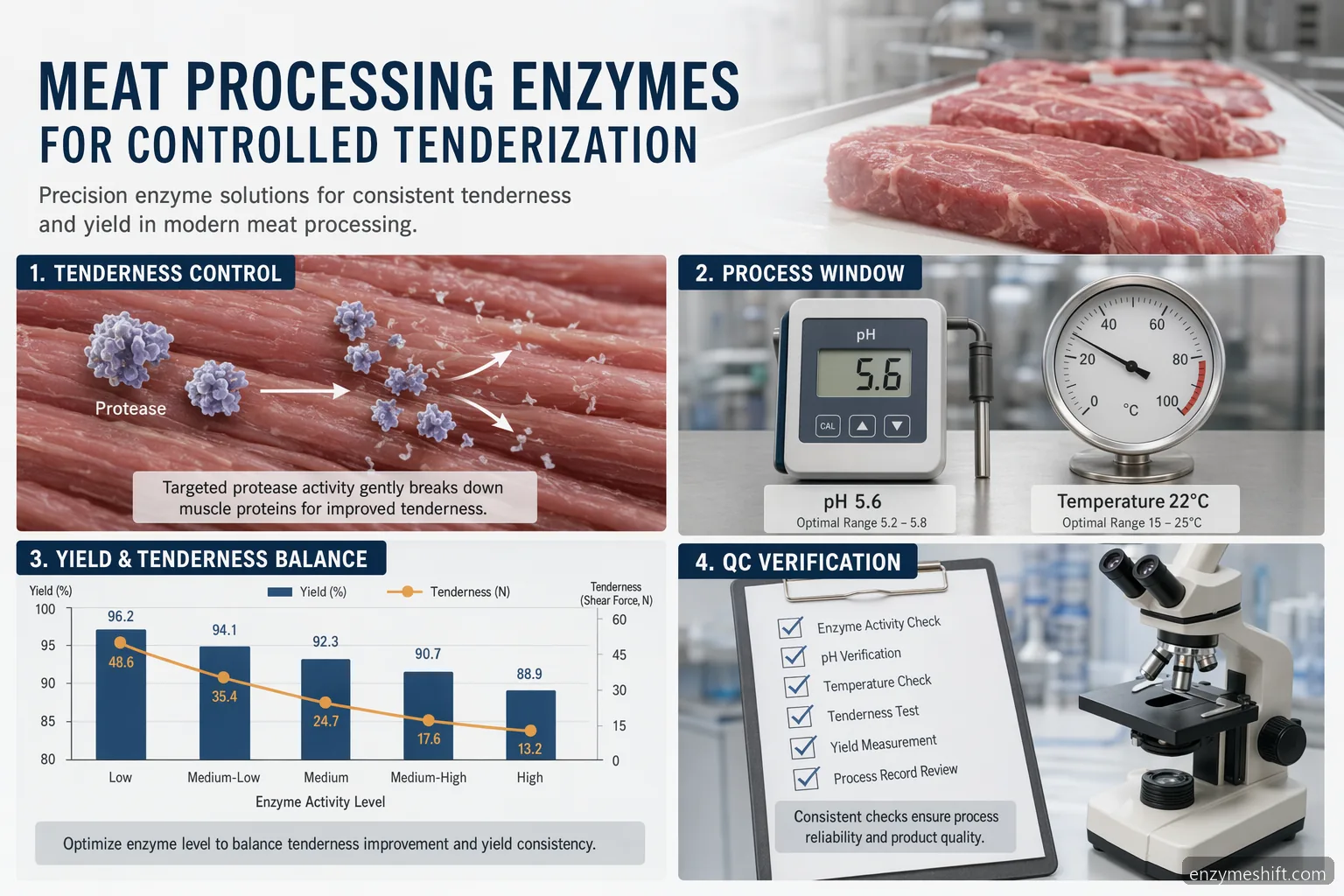
What meat processing enzymes do in tenderization
Meat processing enzymes are functional processing aids or ingredients used to modify muscle proteins under controlled conditions. In meat tenderization, proteolytic enzymes such as papain, bromelain, ficin, or selected microbial proteases partially hydrolyze myofibrillar and connective tissue proteins. The goal is not to digest meat aggressively, but to create a repeatable improvement in bite, chew, and perceived juiciness. Enzymes in meat processing are commonly applied through injection brines, marinades, tumbling, massaging, surface treatment, or dry seasoning systems. Performance depends on enzyme type, meat species, cut, particle size, salt level, pH, temperature, and contact time. For B2B buyers, the right product is the one that matches the plant process and target eating quality, not simply the highest activity unit on paper.
Primary use: controlled tenderization of beef, pork, poultry, and further-processed meats. • Common formats: powder, liquid, granule, or pre-blended marinade system. • Key risk: excessive proteolysis, soft texture, slice breakage, or purge increase.
Typical process conditions for tenderization trials
Pilot work should begin with conservative dosage and defined process windows. Many commercial tenderizer enzyme preparations are evaluated at about 0.005% to 0.10% of finished meat weight, depending on declared activity, carrier concentration, injection level, and hold time. Always follow the supplier TDS because enzyme activity units are not standardized across all products. Meat systems often operate around pH 5.5 to 6.8, while marinades may be adjusted for flavor, yield, and microbial control. Cold application at 0 to 5°C limits uncontrolled reaction during staging, while cooking commonly reduces residual activity as temperature rises. Some proteases act quickly at elevated temperatures, so dwell time during thermal processing must be considered. Validate sensory texture, cook yield, purge, sliceability, and appearance at minimum, target, and maximum dosage.
Start low and increase only after texture and yield checks. • Record brine pH, meat temperature, injection pickup, tumble time, and hold time. • Confirm whether enzyme is added directly or pre-dispersed in brine.
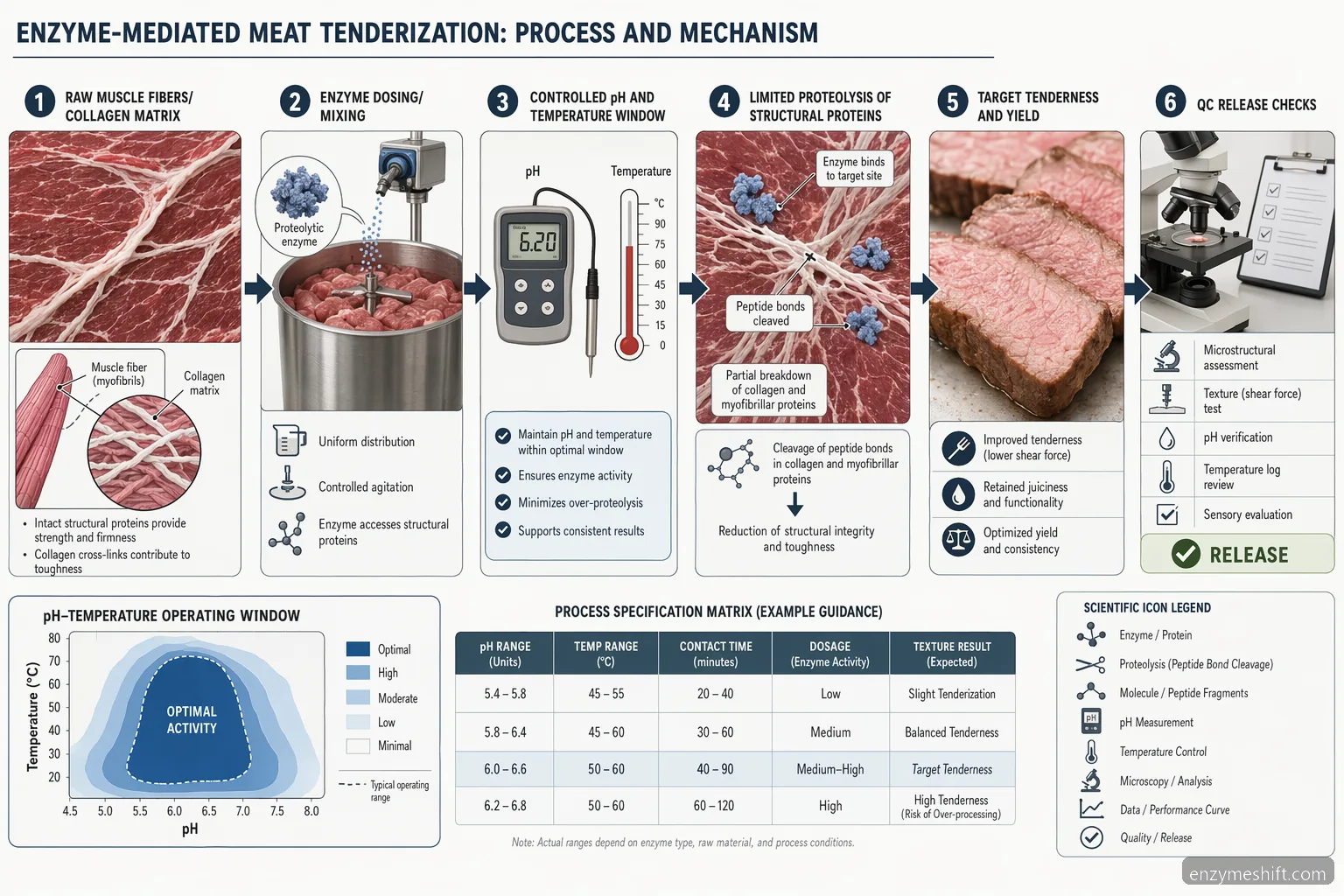
Choosing a supplier for meat tenderization
A meat processing enzymes supplier for meat tenderization should provide more than a price per kilogram. Buyers should evaluate technical fit, lot-to-lot consistency, documentation quality, and responsiveness during plant trials. Ask whether the enzyme source is plant-derived, microbial, or blended, and confirm suitability for the target market and label requirements. Review the COA for activity, microbiological limits, heavy metals where applicable, and physical specifications such as moisture or particle size. The TDS should explain recommended dosage, pH and temperature guidance, solubility, storage, shelf life, and handling precautions. The SDS should support safe handling by plant personnel. Strong suppliers help convert lab dosage into cost-in-use per metric ton of finished product and support troubleshooting if texture varies by cut or season.
Request COA, TDS, SDS, allergen statement, origin information, and storage guidance. • Compare cost-in-use, not only unit price. • Check lead time, minimum order quantity, sample availability, and technical support.
Quality control checks before plant rollout
Tenderization programs should be managed with clear QC limits. Before scale-up, run side-by-side controls using untreated meat, current process, and two or three enzyme dosages. Measure raw material temperature, pH, brine concentration, injection percentage, tumble vacuum, dwell time, and final cook schedule. Objective methods can include shear force testing, texture profile analysis, cook yield, purge after chilled storage, slice integrity, and sensory panel scoring. For sausage or comminuted systems, also monitor bind, particle definition, emulsion stability, and bite. Keep retained samples from each enzyme lot during validation. If results drift, investigate raw material variation, enzyme storage conditions, brine mixing order, and thermal lethality profile before changing dosage. A disciplined trial plan prevents under-tenderization, over-softening, and inconsistent customer experience.
Set acceptance limits for tenderness, yield, purge, and appearance. • Use the same meat source and process conditions when comparing suppliers. • Document lot number, dosage, and hold time for traceability.
Tenderization, restructured meat, and sausage applications
Although this page focuses on meat tenderization, processors often compare meat processing enzymes across related applications. Proteases are mainly selected for tenderness modification, while transglutaminase-type systems are used differently as restructured meat enzyme or cold-set binder solutions to support binding in formed products. In sausage, enzymes may be considered for texture adjustment, protein functionality, or specialty process designs, but the technical objective must be defined carefully. A meat processing enzymes supplier for sausage may recommend a different enzyme class and dosage approach than a meat processing enzymes supplier for restructured meat. Buyers should avoid assuming one enzyme can solve tenderness, binding, slicing, and yield at the same time. Each application needs a separate trial protocol, regulatory review, and finished-product acceptance standard.
Tenderization: controlled proteolysis for improved bite. • Restructured meat: binding and form stability may require different enzyme chemistry. • Sausage: evaluate bind, bite, emulsion stability, and flavor impact.
Documentation and technical decision support
Many buyers search for terms such as role of enzymes in meat processing, role of enzymes in meat processing pdf, or role of enzymes in meat processing ppt when building an internal business case. Supplier presentations and technical PDFs can be useful, but purchasing decisions should be based on verified specifications and plant data. The role of enzymes in meat processing is highly application-specific: a tenderizing protease may improve a tough cut, yet damage texture if applied at excessive dosage or uncontrolled temperature. References discussing proteolytic enzymes in meat industry new aspects on food processing can help explain mechanisms, but commercial approval still depends on your raw material, formulation, processing line, and customer requirements. Treat literature as background and pilot validation as the decision point.
Use technical documents to plan trials, not to replace trials. • Confirm label, market, and regulatory suitability with qualified internal teams. • Archive supplier documents with approved specifications.
Technical Buying Checklist
Buyer Questions
The best choice depends on meat species, cut, process time, temperature, and target texture. Proteolytic enzymes such as papain, bromelain, ficin, and selected microbial proteases are commonly evaluated for tenderization. A supplier should recommend a dosage range based on activity, application method, and heat process. Always validate with pilot trials because excessive proteolysis can cause soft texture, purge, or poor sliceability.
Run a controlled trial with an untreated control, current process control, and at least two enzyme dosages. Keep meat source, brine formula, injection pickup, tumbling, hold time, and cook schedule consistent. Measure sensory tenderness, shear force if available, cook yield, purge, and appearance. Start with conservative dosage from the TDS and scale only after repeatable pilot or line results.
A qualified supplier should provide a current COA, TDS, SDS, allergen statement, storage and shelf-life guidance, origin information, and recommended application conditions. The COA should match the lot shipped and include relevant activity or quality parameters. The TDS should explain dosage, pH, temperature, solubility, and handling. These documents support supplier qualification, internal approval, and production traceability.
Not always. Tenderization usually relies on proteases that partially break down muscle proteins, while restructured meat often requires binding functionality from a different enzyme system or formulation approach. A product that improves tenderness may weaken structure if used incorrectly. If you need both tenderness and binding, run separate trials and ask the supplier to define the mechanism, dosage, and process limits.
Cost-in-use should be calculated per metric ton of finished product, not only by enzyme price per kilogram. Include dosage, enzyme activity, dilution, yield impact, rework risk, labor changes, and any improvement in raw material utilization. Compare suppliers at equivalent performance, not equivalent inclusion rate. A slightly higher-priced enzyme may be more economical if it delivers consistent tenderness at lower dosage.
Related Search Themes
enzymes in meat processing, role of enzymes in meat processing ppt, role of enzymes in meat processing pdf, role of enzymes in meat processing, proteolytic enzymes in meat industry new aspects on food processing, meat processing enzymes supplier for sausage
Meat Processing Enzymes for Research & Industry
Need Meat Processing Enzymes for your lab or production process?
ISO 9001 certified · Food-grade & research-grade · Ships to 80+ countries
Frequently Asked Questions
What are the best meat processing enzymes for tenderization?
The best choice depends on meat species, cut, process time, temperature, and target texture. Proteolytic enzymes such as papain, bromelain, ficin, and selected microbial proteases are commonly evaluated for tenderization. A supplier should recommend a dosage range based on activity, application method, and heat process. Always validate with pilot trials because excessive proteolysis can cause soft texture, purge, or poor sliceability.
How should a processor test a meat tenderizer enzyme?
Run a controlled trial with an untreated control, current process control, and at least two enzyme dosages. Keep meat source, brine formula, injection pickup, tumbling, hold time, and cook schedule consistent. Measure sensory tenderness, shear force if available, cook yield, purge, and appearance. Start with conservative dosage from the TDS and scale only after repeatable pilot or line results.
What documents should a meat processing enzymes supplier provide?
A qualified supplier should provide a current COA, TDS, SDS, allergen statement, storage and shelf-life guidance, origin information, and recommended application conditions. The COA should match the lot shipped and include relevant activity or quality parameters. The TDS should explain dosage, pH, temperature, solubility, and handling. These documents support supplier qualification, internal approval, and production traceability.
Can the same enzyme be used for tenderization and restructured meat?
Not always. Tenderization usually relies on proteases that partially break down muscle proteins, while restructured meat often requires binding functionality from a different enzyme system or formulation approach. A product that improves tenderness may weaken structure if used incorrectly. If you need both tenderness and binding, run separate trials and ask the supplier to define the mechanism, dosage, and process limits.
How do buyers calculate cost-in-use for meat processing enzymes?
Cost-in-use should be calculated per metric ton of finished product, not only by enzyme price per kilogram. Include dosage, enzyme activity, dilution, yield impact, rework risk, labor changes, and any improvement in raw material utilization. Compare suppliers at equivalent performance, not equivalent inclusion rate. A slightly higher-priced enzyme may be more economical if it delivers consistent tenderness at lower dosage.
Related: Meat Processing Enzymes for Controlled Processing
Turn This Guide Into a Supplier Brief Request a technical consultation and pilot sample plan for your meat tenderization process. See our application page for Meat Processing Enzymes for Controlled Processing at /applications/meat-processing-enzymes/ for specs, MOQ, and a free 50 g sample.
Contact Us to Contribute