Meat Processing Enzymes for Meat Tenderization: Process Guide
Process guide for industrial meat processing enzymes for meat tenderization, dosage, pH, temperature, QC, validation, and sourcing.
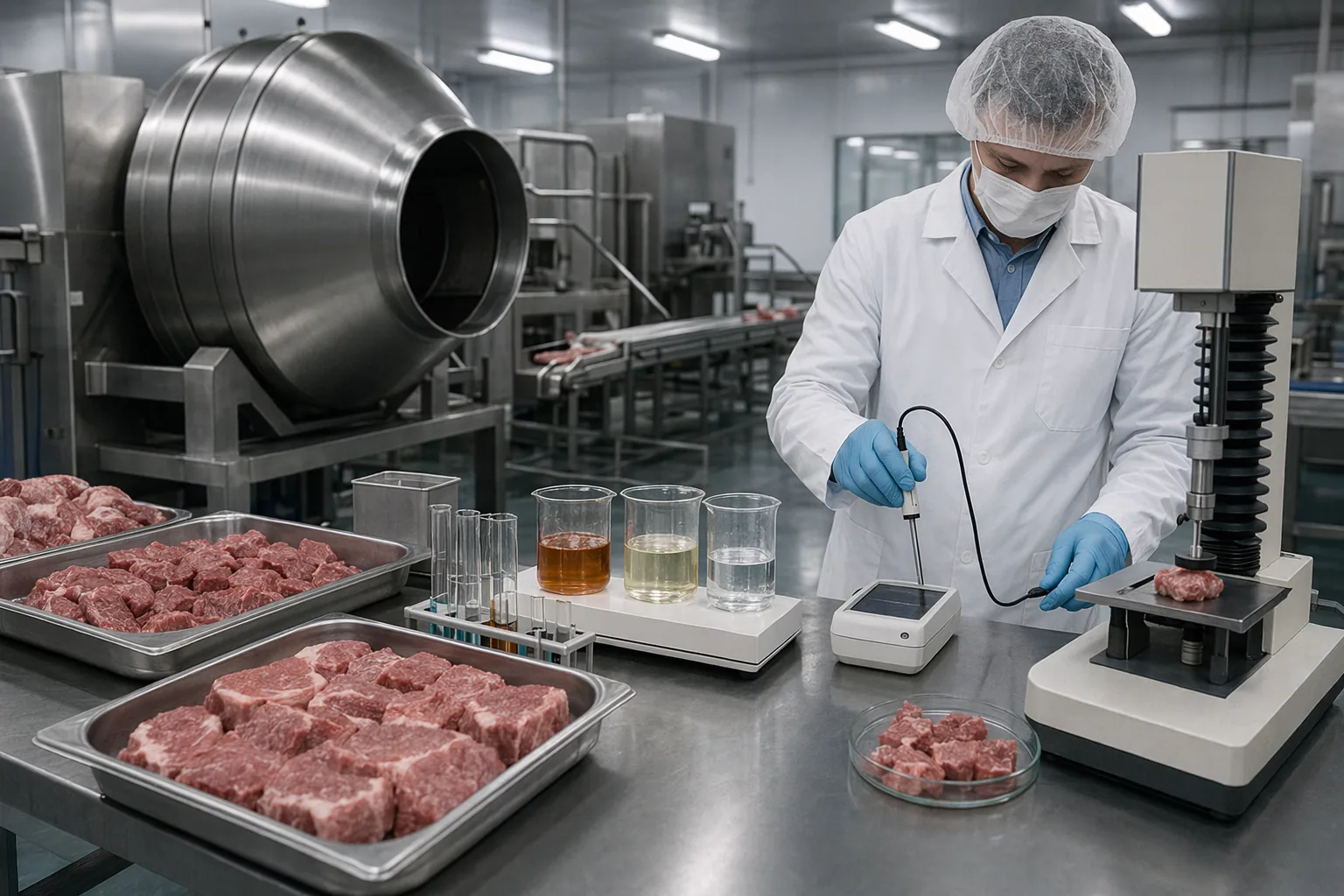
Select and validate meat processing enzymes for consistent tenderness, controlled texture, and scalable production in industrial meat tenderization lines.
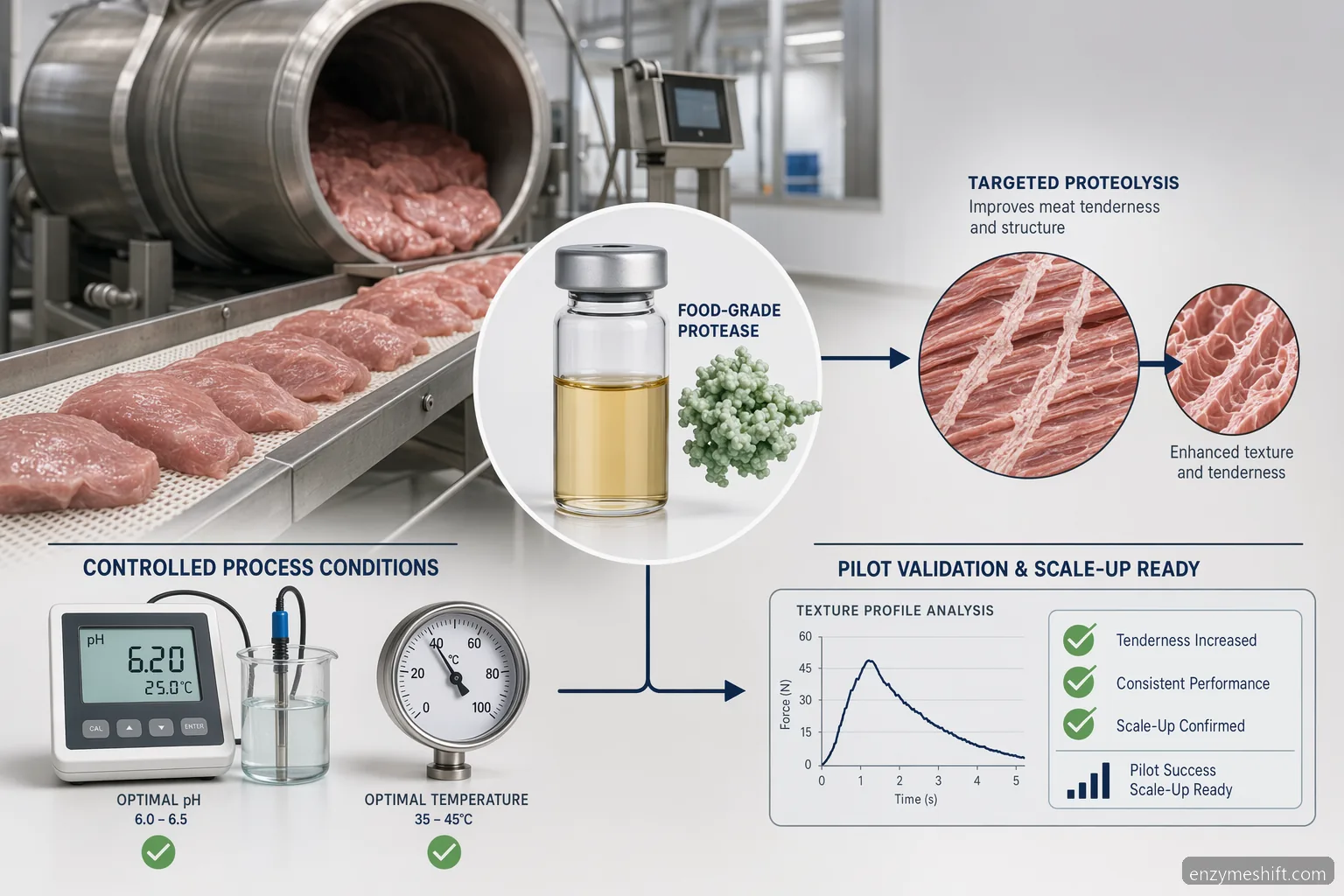
How Enzymes Improve Meat Tenderization
Meat processing enzymes for meat tenderization are used to modify muscle proteins and connective tissue in a controlled way. In industrial meat processing, proteolytic enzymes hydrolyze selected peptide bonds in myofibrillar and collagen-associated proteins, reducing perceived toughness and improving bite. The result depends on enzyme type, meat substrate, particle size or cut thickness, pH, temperature, salt level, contact time, and final cooking step. Papain, bromelain, ficin, and selected fungal or bacterial proteases are common options, but they do not behave identically. Over-application may create soft, mushy, or uneven texture, especially at the surface of whole-muscle products. A practical process therefore starts with the target specification: raw material variability, desired tenderness, cook yield, purge limits, and final sensory profile. For B2B buyers, the goal is not the strongest enzyme on paper, but the most controllable enzyme system at commercial scale.
Primary target: improved tenderness and bite consistency • Key risk: excessive proteolysis and surface softening • Best fit: validated dosage and process control
Enzyme Types Used in Meat Processing
The role of enzymes in meat processing varies by application. Proteolytic enzymes are mainly selected for meat tenderization, while transglutaminase is commonly used as a cold-set binder for restructured meat, portion control, or formed products. For tenderization, plant-derived proteases such as papain and bromelain can be highly active, particularly when moisture, temperature, and time allow diffusion into the meat. Microbial proteases may provide different activity profiles and can be selected for milder or more process-specific hydrolysis. In sausage applications, enzymes must be evaluated against salt, phosphate, spice systems, curing ingredients, fat level, and chopping or mixing energy. In restructured meat, a tenderizer enzyme and a restructured meat enzyme are not interchangeable; one breaks proteins down, while the other may help bind proteins together. Clear application definition prevents purchasing errors and reduces trial-and-error during formulation.
Tenderization: proteolytic enzymes • Restructured meat: binding systems such as transglutaminase • Sausage: compatibility with salt, fat, and spice systems • Selection basis: finished texture target, not enzyme name alone
Typical Process Conditions for Tenderization
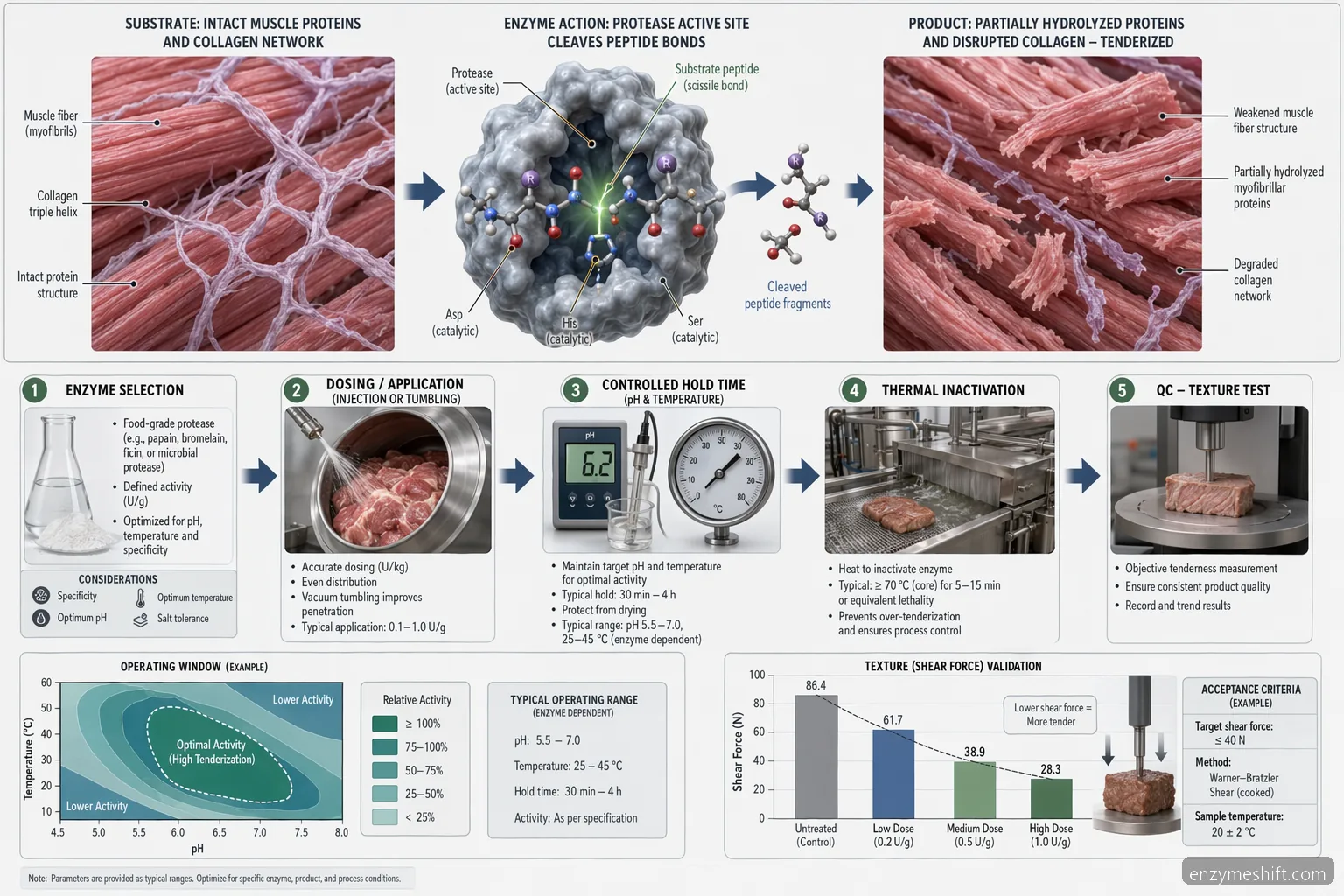
Process conditions should be set from the enzyme supplier’s TDS and confirmed in pilot trials. Many meat tenderization processes operate near natural meat pH, commonly about pH 5.5 to 6.2, although some enzymes have broader activity windows. Enzymes may be applied by injection, marination, vacuum tumbling, surface treatment, or incorporation into comminuted meat. Typical starting dosage bands may range from 0.02% to 0.30% of an enzyme preparation, or about 20 to 300 ppm depending on declared activity, substrate, and contact time. Refrigerated holding slows but may not stop enzyme action, so time limits are important. Activity generally increases with temperature until the enzyme is denatured, which is why cooking or blanching may be used to limit further proteolysis. Exact heat-inactivation conditions vary by enzyme, product geometry, and thermal profile, so they must be verified analytically and sensorially.
Common meat pH range: approximately 5.5 to 6.2 • Starting dosage: often 0.02% to 0.30% preparation, trial dependent • Application methods: injection, marination, tumbling, surface treatment • Control points: temperature, contact time, and final heat step
Pilot Validation and QC Checks
A successful industrial trial should compare untreated control, low dosage, target dosage, and high dosage under the same raw material and process conditions. QC should include raw material pH, temperature, pump or injection pickup, brine concentration, tumbling time, hold time, cook yield, purge, slice integrity, color, and microbiological controls appropriate to the plant’s food safety plan. Texture can be measured with Warner-Bratzler shear force, texture profile analysis, or an internal bite standard. Sensory evaluation should check tenderness, juiciness, residue, surface softness, and product-to-product uniformity. For whole-muscle products, enzyme distribution is often the limiting factor; for comminuted meat, over-processing may happen faster because the enzyme contacts more protein surface. Before scale-up, confirm whether the enzyme remains active during refrigerated storage and whether the intended cook step reliably stops further activity in the finished product.
Run control, low, target, and high dosage trials • Measure shear force, yield, purge, and sensory texture • Confirm enzyme distribution and inactivation • Document lot, batch size, and processing timeline
Cost-in-Use and Commercial Scale-Up
For purchasing teams, enzyme price per kilogram is less important than cost-in-use. A more expensive enzyme preparation may be economical if it works at lower dosage, reduces trim loss, improves portion consistency, or allows a shorter tumbling cycle. Commercial scale-up should calculate dosage per metric ton of meat, brine inclusion rate, labor impact, yield effect, rework risk, and any additional QC testing. Plant trials should also check compatibility with automated dosing systems, brine make-up procedures, pump shear, and sanitation routines. Enzymes are biological processing aids or ingredients depending on jurisdiction and use case, so regulatory and labeling review should occur before launch. The best meat processing enzymes supplier for meat tenderization will help translate bench results into plant parameters, provide lot-to-lot activity information, and support troubleshooting when raw material quality changes.
Evaluate cost per finished kilogram, not only enzyme price • Include yield, cycle time, rework, and QC costs • Confirm regulatory and labeling requirements by market • Scale with documented dosing and mixing procedures
Supplier Qualification for Industrial Buyers
A qualified supplier should provide technical and quality documents before trials begin. Request a current COA for the lot, a TDS describing enzyme activity, recommended use conditions, storage, handling, and application guidance, plus an SDS for safe industrial handling. Depending on the product and market, buyers may also request ingredient composition, allergen information, country of origin, GMO status where relevant, and regulatory statements. Avoid relying only on generic documents such as a role of enzymes in meat processing ppt or role of enzymes in meat processing pdf; those may be useful for training, but purchasing decisions require product-specific data. Ask about activity assay methods, shelf life, storage temperature, packaging sizes, lead times, and technical support. Supplier qualification should also include sample traceability, complaint handling, change notification practices, and the ability to support repeatable performance at production scale.
Request COA, TDS, SDS, and relevant regulatory statements • Review activity assay, shelf life, and storage requirements • Confirm technical support for pilot and plant trials • Assess traceability, change notification, and lead time
Technical Buying Checklist
Buyer Questions
The best choice depends on meat type, product format, process time, temperature, and desired bite. Proteolytic enzymes such as papain, bromelain, ficin, and selected microbial proteases are commonly evaluated. Buyers should compare them in controlled trials using the same raw material and process. The preferred enzyme is the one that delivers consistent tenderness without mushy texture, excessive purge, or yield loss.
Start with the supplier’s TDS and run a dosage ladder rather than selecting one level immediately. A practical screen may include an untreated control, low dose, target dose, and high dose. Dosage must account for declared activity, application method, contact time, temperature, meat pH, and final cook step. Confirm results with shear force, yield, purge, and sensory checks before production use.
Not always. Tenderization usually uses proteolytic enzymes that break down proteins to reduce toughness. Restructured meat often uses a cold-set binder such as transglutaminase to help bind proteins together. These functions are different and may conflict if applied incorrectly. If a product needs both tenderness and binding, validate the sequence, dosage, and holding conditions carefully in pilot trials.
At minimum, request a COA for the supplied lot, a TDS with activity and use guidance, and an SDS for safe handling. Depending on your market and customer requirements, also request ingredient composition, allergen information, country of origin, GMO status where relevant, and regulatory statements. Supplier qualification should include traceability, change notification, shelf-life data, storage instructions, and technical support capability.
Over-softening usually occurs when enzyme dose, contact time, temperature, or distribution is not controlled. Surface-applied enzymes can create a soft exterior while the center remains less tender. Comminuted meat can react quickly because more protein surface is exposed. Prevent issues by using a dosage ladder, controlling hold time, validating cold storage behavior, and confirming that the cooking step limits residual enzyme activity.
Training files can explain the general role of enzymes in meat processing, but they are not enough for procurement or production approval. Buyers need product-specific COA, TDS, SDS, lot activity, storage requirements, regulatory statements, and application data. For industrial meat tenderization, pilot validation and cost-in-use calculations are more reliable than generic educational material or broad literature claims.
Related Search Themes
meat processing enzymes supplier for meat tenderization, industrial meat processing enzymes meat tenderization, enzymes in meat processing, meat processing enzymes, role of enzymes in meat processing ppt, role of enzymes in meat processing pdf
Meat Processing Enzymes for Research & Industry
Need Meat Processing Enzymes for your lab or production process?
ISO 9001 certified · Food-grade & research-grade · Ships to 80+ countries
Frequently Asked Questions
What are the best meat processing enzymes for meat tenderization?
The best choice depends on meat type, product format, process time, temperature, and desired bite. Proteolytic enzymes such as papain, bromelain, ficin, and selected microbial proteases are commonly evaluated. Buyers should compare them in controlled trials using the same raw material and process. The preferred enzyme is the one that delivers consistent tenderness without mushy texture, excessive purge, or yield loss.
How do I set dosage for a meat tenderizer enzyme?
Start with the supplier’s TDS and run a dosage ladder rather than selecting one level immediately. A practical screen may include an untreated control, low dose, target dose, and high dose. Dosage must account for declared activity, application method, contact time, temperature, meat pH, and final cook step. Confirm results with shear force, yield, purge, and sensory checks before production use.
Can the same enzyme be used for tenderization and restructured meat?
Not always. Tenderization usually uses proteolytic enzymes that break down proteins to reduce toughness. Restructured meat often uses a cold-set binder such as transglutaminase to help bind proteins together. These functions are different and may conflict if applied incorrectly. If a product needs both tenderness and binding, validate the sequence, dosage, and holding conditions carefully in pilot trials.
What documents should an industrial enzyme supplier provide?
At minimum, request a COA for the supplied lot, a TDS with activity and use guidance, and an SDS for safe handling. Depending on your market and customer requirements, also request ingredient composition, allergen information, country of origin, GMO status where relevant, and regulatory statements. Supplier qualification should include traceability, change notification, shelf-life data, storage instructions, and technical support capability.
Why do some tenderized products become too soft?
Over-softening usually occurs when enzyme dose, contact time, temperature, or distribution is not controlled. Surface-applied enzymes can create a soft exterior while the center remains less tender. Comminuted meat can react quickly because more protein surface is exposed. Prevent issues by using a dosage ladder, controlling hold time, validating cold storage behavior, and confirming that the cooking step limits residual enzyme activity.
Are role of enzymes in meat processing PPT or PDF files enough for procurement?
Training files can explain the general role of enzymes in meat processing, but they are not enough for procurement or production approval. Buyers need product-specific COA, TDS, SDS, lot activity, storage requirements, regulatory statements, and application data. For industrial meat tenderization, pilot validation and cost-in-use calculations are more reliable than generic educational material or broad literature claims.
Related: Meat Processing Enzymes for Controlled Processing
Turn This Guide Into a Supplier Brief Request a technical consultation, sample, and pilot-trial plan for meat tenderization enzymes from EnzymeShift. See our application page for Meat Processing Enzymes for Controlled Processing at /applications/meat-processing-enzymes/ for specs, MOQ, and a free 50 g sample.
Contact Us to Contribute